DGCA-Approved RPTO
Remote Pilot Training
Structured training designed to develop the knowledge, skills and professional attitude required for safe, certified drone operations — conducted under DGCA Authorisation No. 46/2024.
Programme overview
From fundamentals to certified flight operations.
Aeropioneer Institutes provides structured training designed to progressively take a learner from fundamental concepts to practical flight operations, in accordance with the requirements prescribed by the Directorate General of Civil Aviation (DGCA).
Training combines theory, simulation where applicable, practical flight training, operational procedures, and competency assessment — delivered by a structured instructor system in accordance with applicable regulatory requirements.
Enquire About Admission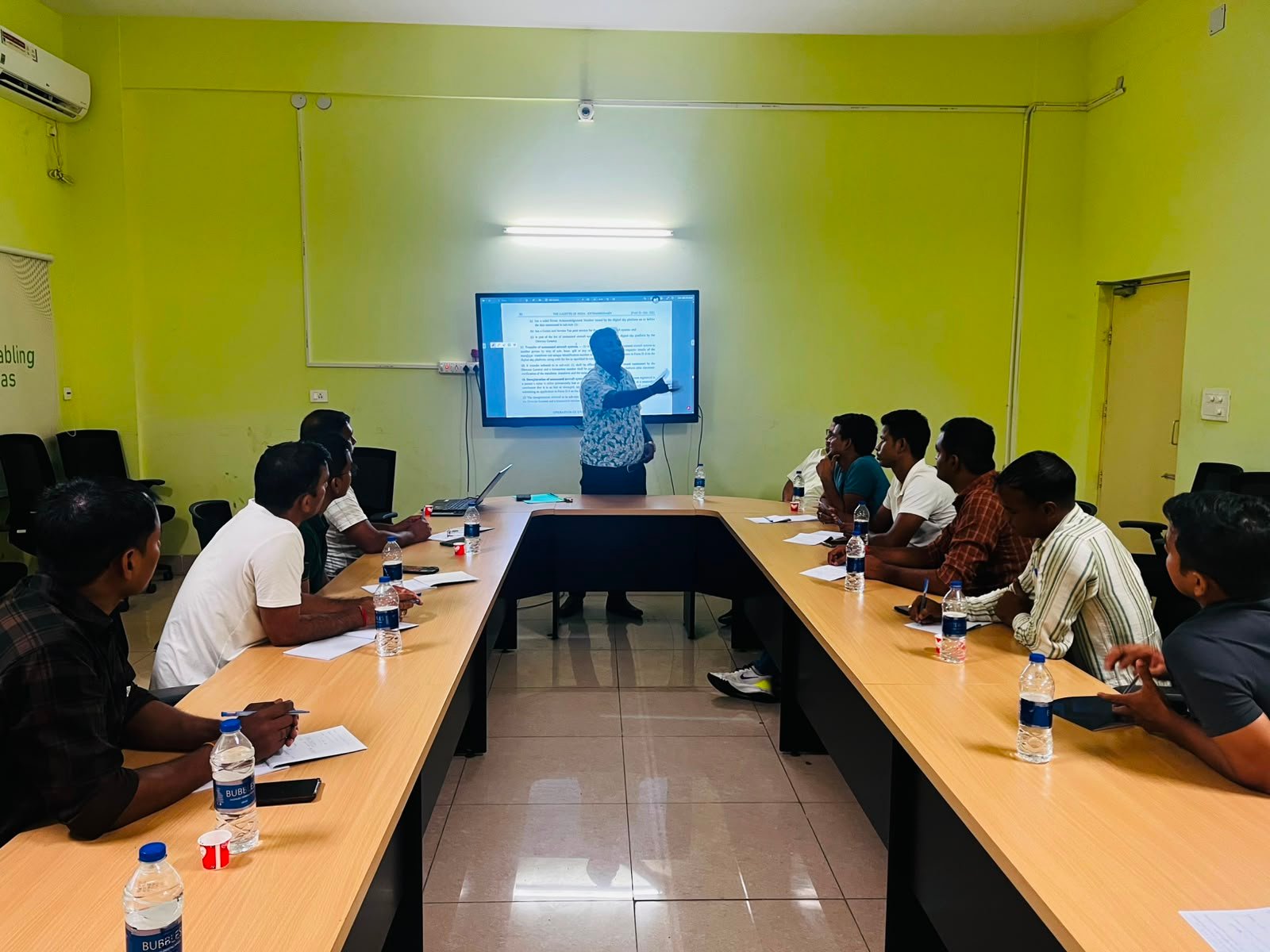
Key areas of training
What students learn.
A. Introduction to Unmanned Aircraft Systems
Drone terminology, UAV/RPAS/UAS fundamentals, drone categories, major components, flight controllers, motors and propellers, batteries, navigation, communication, and ground control systems.
B. Aviation Fundamentals
Lift, weight, thrust, drag, stability, control, aircraft orientation and flight manoeuvres — the basic principles that influence aircraft flight.
C. Remote Pilot Responsibilities
Pre-flight planning, site assessment, airspace awareness, weather assessment, equipment checks, safe take-off and landing, situational awareness, and emergency response.
D. Flight Operations
Aircraft preparation, pre-flight inspection, take-off, hovering, directional control, altitude management, manoeuvring, return-to-home procedures, landing, and post-flight inspection.
Student journey
How the programme runs.
- 1
Admission
Guidance on eligibility, course requirements, training schedule, documentation, fees and facilities.
- 2
Orientation
Institute rules, safety requirements, methodology, attendance, conduct and flight discipline.
- 3
Theoretical Training
Structured classroom instruction covering the subjects applicable to the approved training programme.
- 4
Practical Training
Supervised flight exercises — assembly, pre-flight checks, manoeuvres, mission planning and emergency scenarios.
- 5
Assessment & Completion
Evaluation of theoretical knowledge, flying ability, safety awareness and operational discipline, followed by the applicable certification outcome.
Training in pictures
From safety briefing to certified pilot.
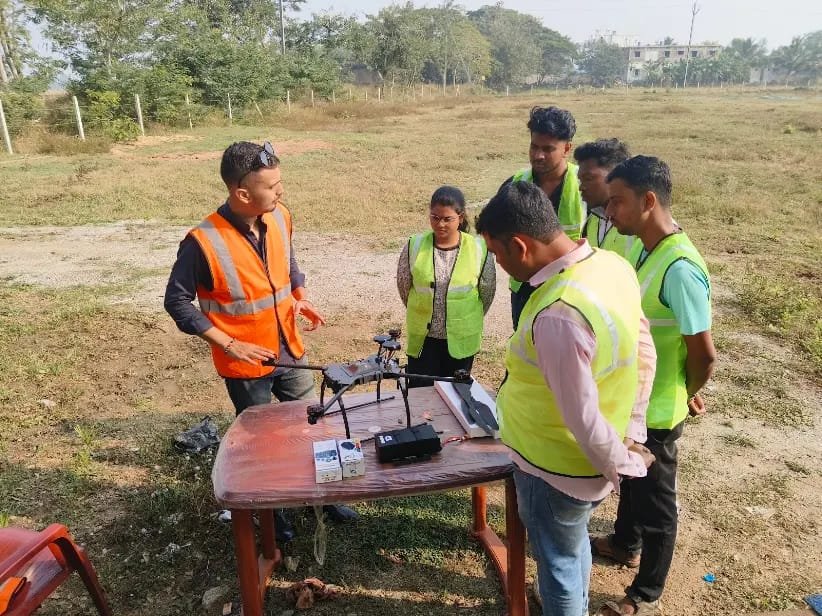 Orientation & Pre-Flight Demonstration
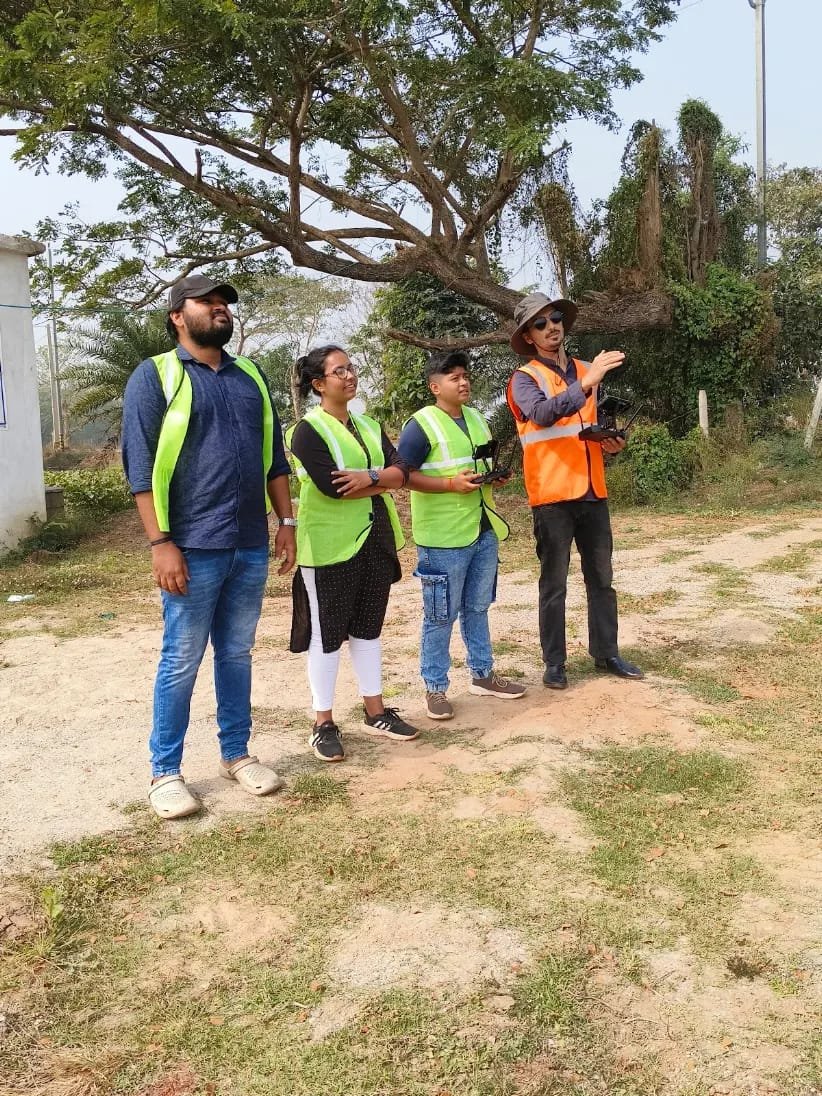 Supervised Practical Training
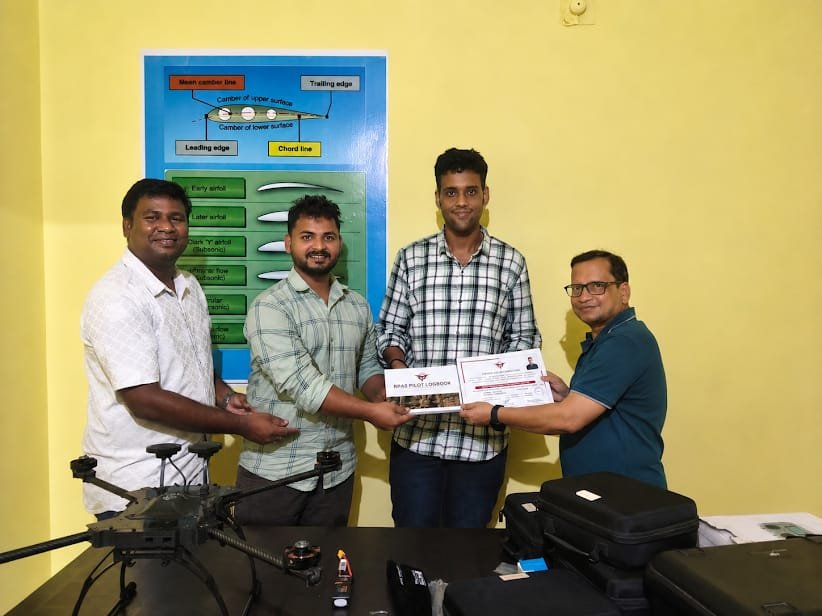 Assessment & Certification
Regulatory details
DGCA RPTO Authorisation
| Authorisation No. | 46/2024 (File No. DGCA-31036/55/2024-DRONE-Dte) |
|---|---|
| Rule | Rule 39, Drone Rules 2021 |
| Validity | 23 August 2024 – 22 August 2034 |
| Scope | Conditions: VLOS · Category: Rotorcraft · Sub-Category: RPAS · Class: Small |
| Approved Training Base | Plot No. 726, Khata No. 266, Kanthapada, Puri Sadar, Delanga, Satyabadi, Dist. Puri, Odisha – 752015 |
| Training & Procedure Manual | AEROPNR/TPM/001, Issue 01, accepted by DGCA |
Beyond certification
Career & entrepreneurship pathways.
A trained remote pilot can explore opportunities in drone surveying, GIS and mapping, agriculture, construction, mining, infrastructure inspection, real estate, media, industrial inspection, environmental monitoring, disaster management, government projects, and drone service enterprises — or start their own drone service business.